

What Makes Guthrie’s Pulse Center Different

Q&A with David Fletcher
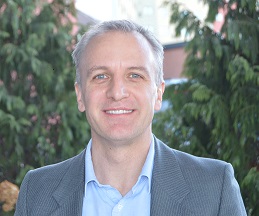 David Fletcher, MBA, is the new vice president of the Guthrie Pulse Center, bringing more than 25 years of healthcare leadership to The Guthrie Clinic. He previously served as associate vice president of telehealth at Geisinger, where he successfully managed a 128-person team and exponentially scaled telemedicine usage. Fletcher will now leverage his extensive expertise in virtual care to advance the Guthrie Pulse Center, ensuring rural communities receive accessible, high-quality support through this technology-driven approach to care.
From virtual nursing and ICU monitoring to remote patient observation and at-home patient monitoring, technology is rapidly changing how healthcare is delivered. At The Guthrie Clinic, the Guthrie Pulse Center is helping bring those innovations together into one connected model designed to improve patient safety, support caregivers and expand access to care across rural communities.
Helping lead that transformation is David Fletcher, recently named Vice President of the Guthrie Pulse Center. Fletcher brings more than 25 years of healthcare experience to the role, including nationally recognized leadership in telehealth, virtual care and technology-enabled healthcare operations.
For those learning about the Guthrie Pulse Center for the first time, can you explain what it is?
The Guthrie Pulse Center is a hybrid care model that integrates experienced virtual clinical teams with bedside caregivers across The Guthrie Clinic. Through a centralized operations hub, virtual nurses and observers, intensivists, transfer center staff and other clinical support teams work together alongside advanced technology to improve patient care, strengthen patient safety and solve problems in real time. The model allows Guthrie to extend clinical expertise across hospitals, support bedside caregivers and create operational efficiencies throughout the health system.
Dr. Sabanegh, Guthrie’s President and CEO, has a great analogy for the Pulse Center, comparing it to a smartphone. The operations hub is like the phone’s operating system – the foundational technology, infrastructure and centralized team everything runs through. From there, we can continue building different “applications” depending on the healthcare challenges we’re trying to solve.
For example, one application is virtual nursing, where remote nurses help bedside staff with admissions, discharge paperwork and patient education. Another application is virtual observation, sometimes called telesitting, where trained staff remotely monitor at-risk patients.
The advantage of this model is that once the infrastructure is in place, we can continue expanding and evolving its capabilities as healthcare needs change. One of the newest “applications” currently being developed is at-home patient monitoring. Using connected devices, such as blood pressure cuffs and other remote monitoring tools, care teams can track patients in their homes and identify concerns earlier – with the goal of intervening before a patient needs to visit the emergency department or be admitted to the hospital.
What problems does the Guthrie Pulse Center help overcome?
The Guthrie Pulse Center was designed to help address some of the biggest challenges facing healthcare today, particularly in rural communities.
We generally think about it in three key areas:
- Patient safety – Services such as tele-observation allow hospitals to provide continuous patient monitoring more consistently and efficiently. Historically, hospitals often needed in-person observation for patients at risk of falls, which can be difficult for staff, especially in rural communities.
The Guthrie Pulse Center helps improve safety while using clinical staff more effectively and incorporating technology that can help catch issues before they happen.
- Workforce sustainability – Nurses want to spend more time caring for patients and less time completing paperwork and time-consuming administrative tasks. Virtual nursing support can help reduce this burden while also giving early-career nurses access to experienced clinicians who provide guidance in real time.
In addition, the Guthrie Pulse Center offers experienced nurses a unique opportunity to continue working without the physical demands of bedside care, which has helped Guthrie retain nurses who might otherwise have left the profession. Taken together, the Pulse Center is valuable for recruitment, retention and long-term workforce stability.
- Operational efficiency – The Guthrie Pulse Center helps streamline workflows through centralized monitoring, virtual nursing support and coordinated services such as discharge planning and transfer management. By helping with administrative and coordination tasks, we allow bedside teams to focus more directly on patient care.
What makes The Pulse Center unique?
The Guthrie Pulse Center is built on integration, and that is what sets it apart. In many health systems, services such as virtual nursing, tele-ICU, telemetry and transfer center operations are built and operated by separate departments.
At Guthrie, we have centralized these services within the Guthrie Pulse Center, creating a connected model of care where teams can collaborate in real time, share expertise across disciplines and respond more quickly to patient needs. That level of integration is uncommon, even among large and urban health systems. A lot of credit goes to Guthrie leadership for being very forward-thinking and making these investments early to respond to the healthcare needs of their rural communities.
But integration alone is not what makes the Guthrie Pulse Center work. The model reflects more than 100 years of Guthrie experience delivering care across rural Pennsylvania and New York. That history shapes how we think about technology, how we design clinical workflows and how we support the people doing the work. The Guthrie Pulse Center was built inside Guthrie to address the most persistent and complex challenges in rural healthcare, by a team that understands those challenges from the inside.